Hall-Effect Wireless Gamepad + Dock: Setup & Compatibility
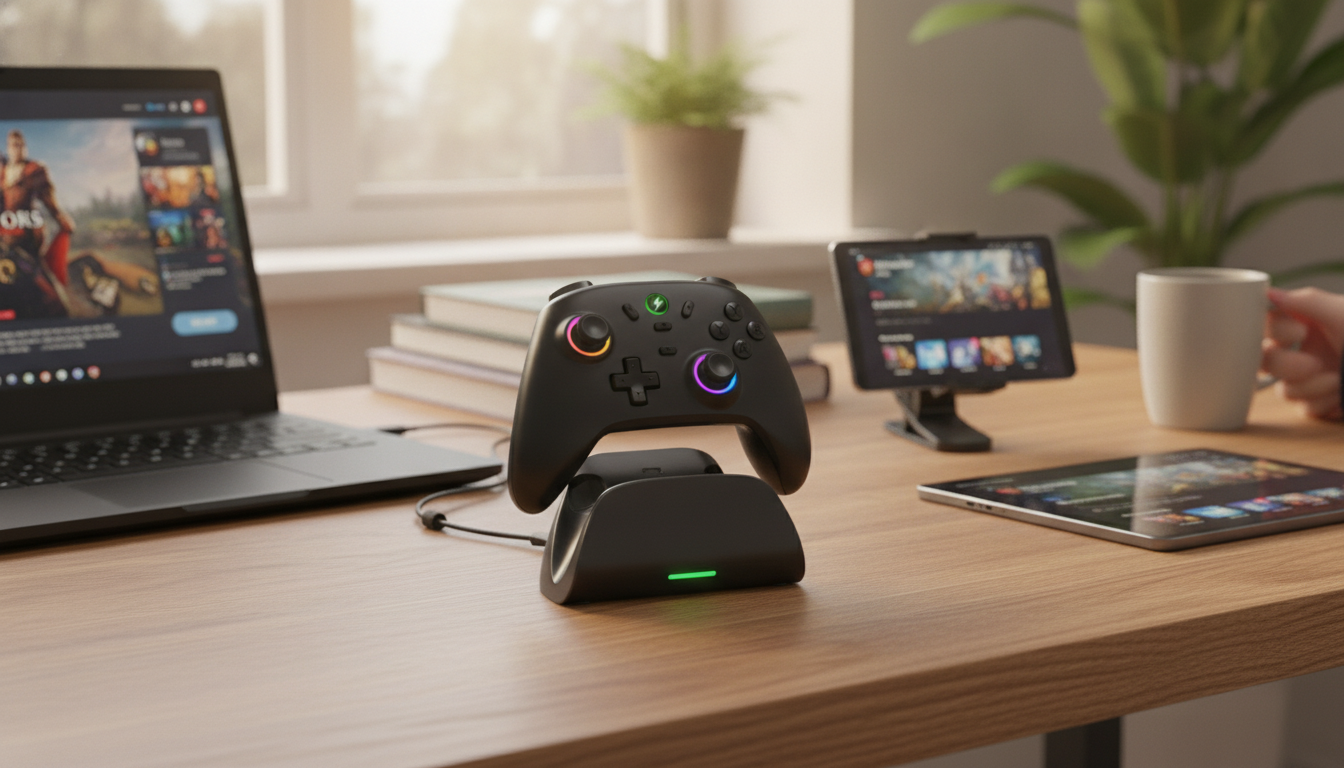
Wireless Hall-Effect Gamepad with Cross-Platform Support & Charging Stand: What to Expect and How It Fits Your Setup
A wireless controller can feel great in hand yet still fall short if it drifts, doesn’t pair reliably, or is annoying to keep charged. This guide breaks down what a Hall-effect wireless gamepad with cross-platform support and a charging stand typically delivers, how to evaluate compatibility and latency, and what to look for before buying or gifting. For more guidance, see Sensor Arrays: A Comprehensive Systematic Review – PMC.
Why Hall-Effect Controls Matter for Everyday Play
Hall-effect sensing uses magnets to detect movement instead of relying on contact-based parts that rub over time. In practical terms, that design can help reduce the gradual wear that often contributes to stick drift, especially if you play frequently or tend to press hard during intense matches. For a deeper technical explanation of the principle, IEEE Spectrum has a solid overview of how Hall-effect sensors work. For further reading, see Innovation Day | College of Engineering – University of Nevada, Reno.
More consistent centering can translate to better micro-adjustments—useful for shooters when feathering aim, racing games when holding a clean line through a corner, and platformers where small directional inputs prevent over-correcting. That said, the “long-term feel” still depends on more than the sensor type. Calibration tools, deadzone options, and firmware updates can make a noticeable difference in how stable and responsive the sticks feel months down the line.
Cross-Platform Support: Getting the Right Connection Mode
Cross-platform usually means the controller can pair with a mix of devices such as PC, Android, and iOS (and sometimes select consoles or console-adjacent modes). Before buying, confirm whether platform support requires a specific mode switch, button combo, or pairing routine. The best experience comes from controllers that make those modes obvious with labeled LEDs or clear documentation—so you don’t accidentally connect in the wrong profile and end up with swapped buttons.
Connection type also matters:
- Bluetooth: Convenient for phones, tablets, and laptops with no extra accessories. Bluetooth behavior is governed by the Bluetooth Core Specification, but real-world latency and stability can vary by device and environment.
- 2.4 GHz receiver (dongle): Often favored on PC for a more consistent link and simpler plug-and-play pairing, especially in busy wireless environments.
- Wired USB: The baseline for reliability and minimal latency, and a good fallback when troubleshooting.
On Windows PCs, controller compatibility commonly comes down to whether it appears as XInput (common for modern games) or DirectInput (more typical for older titles and some specialty setups). Microsoft outlines the difference in XInput and DirectInput documentation. If you play across multiple launchers, XInput support can reduce time spent remapping controls.
Charging Stand Convenience: What Makes It Actually Useful
A charging stand sounds like a small perk—until you’ve lived with one for a week. Instead of hunting for a cable or noticing a dead battery right as a session starts, docking becomes a habit: play, set it down, walk away. That “always topped up” routine can be the difference between wireless feeling effortless versus becoming another gadget to manage.
When evaluating a dock, focus on real usability:
Quick Spec Checklist (What to Verify Before Buying)
| Item to confirm | Why it matters | What to look for |
|---|---|---|
| Supported platforms | Avoids pairing surprises | Clear list for PC/Android/iOS/console and any limitations |
| Connection modes | Controls latency and stability | Bluetooth vs 2.4 GHz vs wired; mode switch/LED indicators |
| Input standard on PC | Affects game compatibility | XInput support and easy remapping if needed |
| Charging method | Determines daily convenience | Dock alignment, USB-C power, charge status light |
| Stick settings | Fine-tunes precision | Adjustable deadzones/calibration and firmware updates |
Who This Type of Controller Is Best For
Common Setup Tips for a Smoother First Week
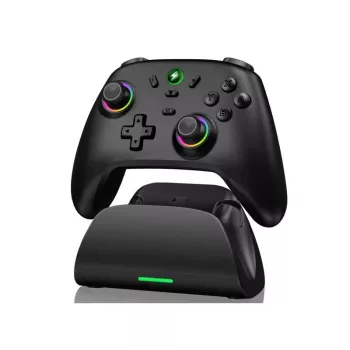
Product Spotlight: Wireless Hall-Effect Gamepad with Cross-Platform Support & Charging Stand
If the goal is a cleaner charging routine and more consistent stick feel in one package, the Wireless Hall-Effect Gamepad with Cross-Platform Support & Charging Stand is designed around that combination. It pairs a wireless gamepad with a dedicated dock so the controller has a “home base” between sessions, helping keep batteries topped up and clutter down.
More In-Stock Picks (Giftable Add-Ons)
- Clarks Women’s Grey Leather Sneakers for Spring/Summer for a practical, everyday gift.
- Nordic Girl Diver Reading Figurine for a desk or shelf accent in a gaming or home-office space.
FAQ
Do Hall-effect sticks completely prevent stick drift?
No—Hall-effect sensing can reduce wear-related drift because it avoids certain contact-based parts, but calibration, firmware, physical damage, or debris can still cause issues. If movement feels off, recalibrate (if supported) and set a small deadzone to stabilize centering.
What’s the difference between Bluetooth and a 2.4 GHz wireless receiver for gaming?
Bluetooth is convenient and widely compatible, especially for phones and tablets, but latency and stability can vary by device and nearby interference. A 2.4 GHz receiver is often more consistent on PC and can feel snappier for action games, while wired remains the most reliable option for competitive play.
Can the controller be used while charging on the stand?
Many controllers support play-while-charging, but it depends on the specific design of the controller and dock. Check whether the stand supplies power during use and whether a cable connection is available for uninterrupted sessions.








Leave a comment