Change a Flat Tire Safely: Steps + Printable Checklist
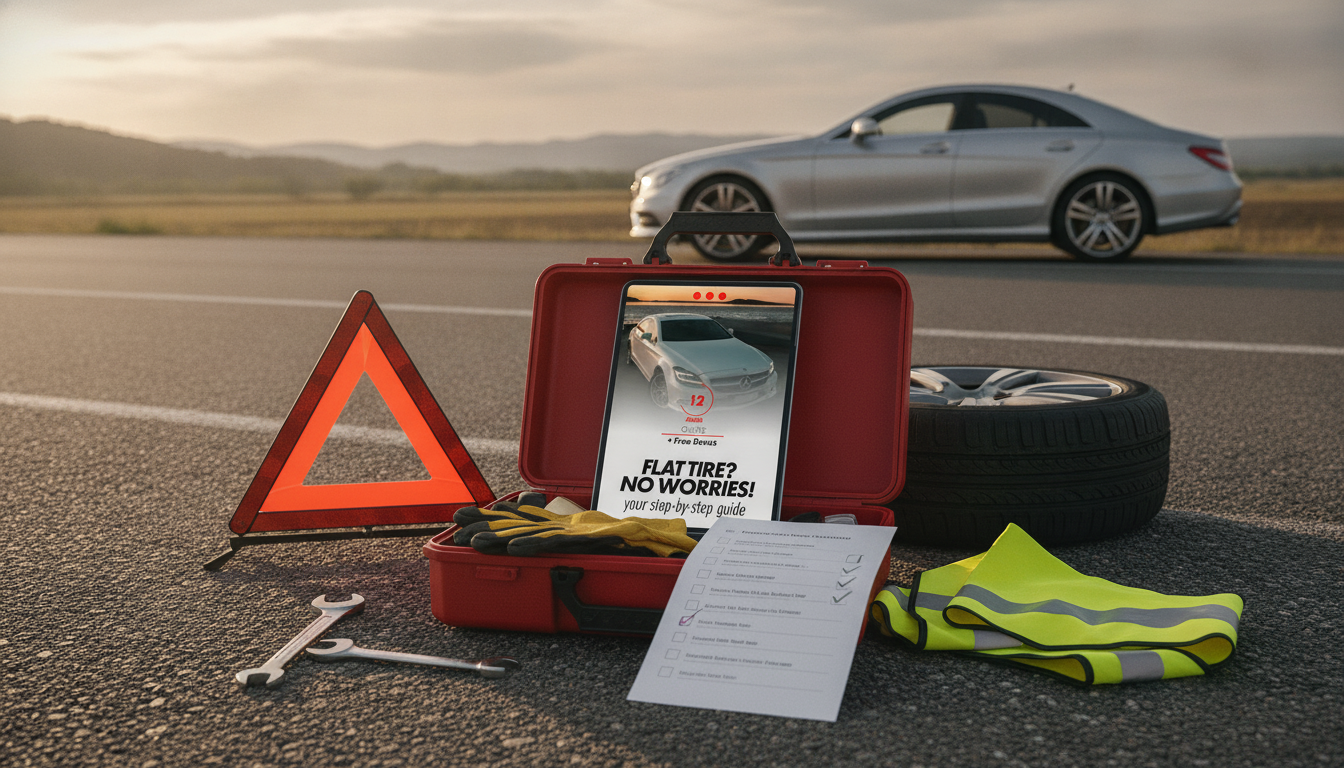
Flat Tire? No Worries! A Beginner-Friendly Step-by-Step Tire Change Guide (With Printable Checklist)
A flat tire can happen anywhere—day or night, city or highway. With the right safety steps and a simple order of operations, changing a tire becomes a calm, repeatable process. The goal isn’t speed—it’s stability: keeping the vehicle from moving, using the jack correctly, and tightening the wheel evenly so you can drive to a safe repair location.
Before Anything Else: Get to a Safe Spot
If the tire starts thumping, pulling, or the TPMS light comes on, slow down gradually. Keep both hands on the wheel and avoid sudden braking or sharp steering that can destabilize the car.
- Move to a flat, stable area away from traffic when possible; avoid soft shoulders, gravel, and slopes.
- Turn on hazard lights immediately; at night, keep interior lights low so you can see outside better.
- Set the parking brake and shift into Park (or into gear for a manual transmission).
- Place wheel chocks on the opposite side of the car from the flat tire (a sturdy rock or block can help in a pinch).
- Get passengers out of the vehicle and positioned well away from traffic, ideally behind a barrier.
Quick Roadside Safety Checklist
| Item | Why it matters | Minimum action |
|---|---|---|
| Hazard lights | Alerts other drivers early | Turn on immediately after noticing the flat |
| Flat, firm ground | Prevents jack slip and vehicle roll | Avoid slopes, gravel, soft dirt when possible |
| Parking brake + Park/gear | Adds resistance against rolling | Engage fully before exiting |
| Wheel chock | Back-up protection against movement | Chock a wheel diagonally opposite the flat |
| Reflective triangle/flares | Improves visibility behind the vehicle | Place at a safe distance behind the car |
For additional tire safety guidance, see NHTSA’s tire resources and AAA’s tire safety tips.
Know the Gear: Tools to Find in the Trunk (or Add to a Kit)
Take two minutes on a calm day to locate your tools and spare. That’s when you’ll discover missing parts—before you’re stuck on the shoulder.
- Spare tire type matters: a temporary “donut” spare usually has speed and distance limits; a full-size spare typically does not.
- Find the essentials: jack, lug wrench, and (if applicable) the wheel lock key.
- Make it easier: flashlight or headlamp, gloves, and a kneeling pad help in rain, heat, or darkness.
- Verify inflation: a small tire pressure gauge and compact inflator can confirm the spare is usable.
- If the spare is flat or missing: calling roadside assistance is often the safest move, especially in traffic-heavy areas.
If you want a simple, print-and-keep reference that follows a clean, beginner-friendly order of operations, consider Flat Tire? No Worries! Your Step-by-Step Guide (Digital Download + Printable Checklist).
Step-by-Step: How to Change a Tire Without Guesswork
These steps work for most passenger vehicles, but always follow your owner’s manual for lift points and any special instructions. The two biggest success factors are (1) doing your loosening before lifting and (2) tightening evenly in a star pattern.
Star Pattern Tightening Order (5-Lug Example)
| Tightening pass | Order |
|---|---|
| Pass 1 (snug) | 1 → 3 → 5 → 2 → 4 |
| Pass 2 (firm) | 1 → 3 → 5 → 2 → 4 |
| Final check | Repeat the same order |
Common Mistakes That Cause Injuries or Damage
After the Swap: What to Do Next
When to Stop and Call for Help
| Situation | Why it’s risky | Safer move |
|---|---|---|
| Narrow shoulder or heavy traffic | High chance of being struck | Drive slowly to a safer area or call roadside assistance |
| Jack won’t seat securely | Slip/roll hazard | Do not lift; call for help |
| Spare is missing/flat | No safe replacement tire | Roadside assistance or tow |
| Multiple flats or damaged wheel | Vehicle may be unsafe to drive | Tow to a repair shop |
Printable Checklist + Digital Guide Option
Flat Tire? No Worries! Your Step-by-Step Guide (Digital Download + Printable Checklist) is designed to be quick to scan on the roadside, with reminders that help beginners stay safe and avoid missed steps.
If you need steadier footing while working on the shoulder (especially at night or in wet conditions), supportive shoes can help you keep balance and avoid slips. Clarks Women’s Grey Leather Sneakers for Spring/Summer are an option to consider for everyday driving comfort and stable traction.
FAQ
Can a tire be changed without a jack?
No—some type of safe lifting system is required to remove the wheel. If your vehicle’s jack is missing or unusable, move to a safer location if possible and call roadside assistance rather than attempting an improvised lift.
How tight should lug nuts be after installing the spare?
Use the vehicle manufacturer’s torque specification whenever possible. Tighten in a star pattern, then recheck after a short drive (often 25–50 miles); a torque wrench helps avoid under- or over-tightening.
How far can a temporary spare tire be driven?
Follow the limits printed on the spare’s sidewall and the guidance in your owner’s manual. Temporary spares are commonly limited to lower speeds and shorter distances, so arrange a repair or replacement as soon as you can.











Leave a comment