Talk & Connect Workbook: Calmer Parent-Child Talks

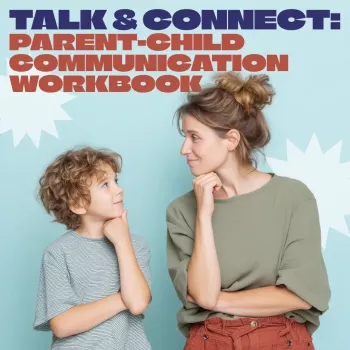
Talk & Connect: A Parent-Child Communication Workbook for Stronger Bonds
Busy days, big feelings, and quick routines can make real conversation feel harder than it should. A simple workbook approach can turn everyday moments into meaningful check-ins—building trust, emotional vocabulary, and calmer problem-solving over time. When talking feels tense (or nonexistent), a few guided pages can make it easier to slow down, listen well, and reconnect without turning everything into a lecture.
What makes parent-child communication feel difficult
Most families don’t struggle because they “don’t care.” They struggle because everyday life creates the perfect conditions for misunderstanding.
- Kids may not have the words for what they feel, so emotions come out as silence, sarcasm, or shutdowns.
- Parents often default to fixing, teaching, or correcting when a child needs connection first.
- Time pressure creates “drive-by conversations” that miss what’s underneath a behavior.
- Different temperaments and ages need different kinds of questions and pacing.
It can also help to remember that stress changes communication for everyone. When family stress is high, even small topics can feel loaded. For practical, research-informed guidance on supporting healthier family dynamics, see the APA’s resources on managing stress for a healthy family.
How a workbook format supports better conversations
A workbook creates a neutral “third space” between parent and child. Instead of one person leading with pressure (“Talk to me—now”), the page offers a starting point that feels safer and more predictable.
- Provides prompts that reduce the pressure to come up with the “right” thing to say.
- Encourages consistency through short routines (5–10 minutes) rather than rare long talks.
- Helps children practice naming feelings, needs, and boundaries in a structured way.
- Creates a shared record of progress—useful for noticing patterns and wins.
- Makes it easier to re-start after conflict with guided reflection pages.
Workbook habits that strengthen connection
| Workbook habit | Why it helps | When to use it |
|---|---|---|
| Daily check-in question | Normalizes talking about feelings before they build up | After school, after dinner, before bed |
| Emotion naming + body cues | Builds self-awareness and reduces acting-out | During meltdowns or low moods |
| Repair and reconnect page | Models accountability and rebuilds trust after conflict | After arguments, rule-breaking, or miscommunication |
| Gratitude and appreciation prompts | Shifts attention toward positive attention and belonging | Weekends or family meetings |
| Problem-solving steps | Teaches collaboration instead of power struggles | Recurring issues like chores, screens, homework |
Inside “Talk & Connect”: what it’s designed to help with
The Talk & Connect parent-child communication workbook is built for real homes—where kids are tired after school, parents are juggling responsibilities, and the best conversations often happen in small windows of time.
- Conversation starters that fit different moods (silly, serious, reflective, curious).
- Guided prompts that support emotional connection and empathy.
- Positive parenting exercises that focus on listening, validation, and repair.
- Pages that can be used for one child or adapted for siblings with shared family rules.
- A gentle structure for topics that often become tense (school stress, friendships, screens, rules).
For additional positive parenting tips and age-based communication guidance, the American Academy of Pediatrics is a helpful reference point.
Conversation starters that work in real life
The best prompts do two things: they feel easy to answer, and they keep the child in the “lead role” of their own story. A few small shifts can change the tone fast.
- Use “tell me more” follow-ups to keep the child leading the story.
- Ask for specifics (who/what/when) before offering advice.
- Try indirect questions for kids who clam up (favorites, hypotheticals, “if your day was a movie…”).
- Pair questions with a low-pressure activity (snack, walk, coloring) to reduce intensity.
- End hard talks with a reconnecting ritual: hug, high five, shared plan, or a small choice.
If a child is reluctant, the setting matters as much as the question. Side-by-side moments—car rides, a quick errand, or a short walk—often lower the emotional volume and make it easier to open up.
A simple weekly routine to build emotional connection
To make the routine feel inviting (not like a meeting), pair it with something your child already likes. A few families build a “talk spot” at home—a comfy chair, a small snack, and a calm object that signals, “This is a safe place to share.” A simple decor piece can even become part of the ritual, like the Nordic Girl Diver Reading Figurine in a reading nook or quiet corner.
For families who communicate best while moving, a weekly “walk and talk” can be a game-changer. Comfortable shoes help that habit stick—something like Clarks Women’s Grey Leather Sneakers for Spring/Summer can make it easier to keep the routine going when life gets busy.
Who this workbook is a good fit for
Common mistakes that shut conversations down (and what to do instead)
For families with younger kids, the CDC’s Essentials for Parenting offers straightforward strategies that pair well with short, consistent workbook routines.
Talk & Connect: quick product details
FAQ
What age is a parent-child communication workbook best for?
Many families use a workbook like this from early elementary through the teen years. For younger kids, use fewer questions and offer choices; for tweens and teens, lean into more reflective prompts and longer follow-ups.
How often should families use conversation starter prompts?
Aim for short sessions about 2–4 times per week. Consistency matters more than length, so pairing prompts with routines like bedtime or after school usually works best.
What if my child refuses to talk?
Keep it low-pressure: try side-by-side activities, offer a choice between two prompts, and share your own answer first. Respect pauses while keeping the invitation open, and use playful or hypothetical questions to lower the stakes.











Leave a comment