3-Tier Countertop Food Warmer: Adjustable Heat Guide
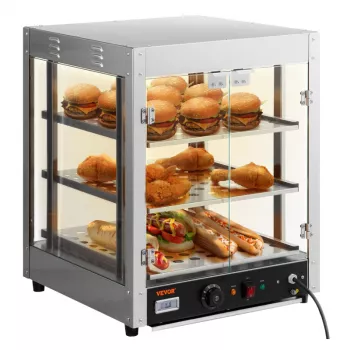
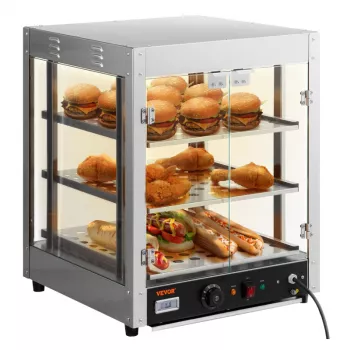
3-Tier Countertop Food Warmer with Temperature Control
A multi-level countertop warmer helps keep cooked foods ready to serve without constant reheating. With three tiers and adjustable heat, it can support buffet lines, catering setups, concession counters, and busy home gatherings while aiming for steady holding temperatures and efficient use of counter space.
What a 3-tier countertop warmer does
A three-tier countertop food warmer is built for hot holding—keeping prepared foods at a consistent, service-ready temperature after cooking is already done.
- Keeps prepared foods warm for service by maintaining a controlled holding temperature rather than cycling through repeated microwave or oven reheats.
- Uses vertical space with multiple shelves/tiered compartments to hold several trays or dishes at once.
- Supports quick access during service so items can be replenished, rotated, and monitored with minimal disruption.
- Fits common scenarios such as parties, potlucks, break rooms, small cafés, church events, and catering stations.
Temperature control and safer holding
Temperature control is more than a convenience—it helps food stay appetizing (less drying, less overcooking) while supporting safer service. Adjustable settings let you match heat output to what you’re holding, such as breads that need gentler heat versus proteins that benefit from a stronger hold.
- Adjustable temperature control helps match heat level to different foods and reduces over-drying from excessive heat.
- For hot holding, align practice with food-safety guidance for keeping hot foods at safe temperatures during service.
- Use a food thermometer to verify internal food temperatures, especially after refilling trays or when doors are opened frequently.
- Avoid mixing freshly cooked items with older batches without rotation; use a simple “first in, first out” approach.
For general food-safety reference, see the USDA’s overview of the “Danger Zone” and time/temperature basics at USDA FSIS — Danger Zone (40 °F to 140 °F), and the hot-holding reference standard in the FDA Food Code (2022).
| Food type | Holding goal | Practical tip |
|---|---|---|
| Fried foods | Warm without sogginess | Use moderate heat; avoid covering tightly so steam can escape. |
| Roasted meats | Warm and moist | Hold with light coverage when appropriate; add drippings/sauce as needed. |
| Sauced dishes | Even heat through | Stir periodically and monitor thickness to prevent scorching at edges. |
| Bread/rolls | Warm, not dried out | Lower heat and shorter holding times; rotate batches more often. |
Three-tier capacity and workflow
The advantage of three tiers isn’t only “more space”—it’s better organization during real service. When people are lining up, quick decisions like where to place the most popular item can reduce door-open time and keep temperatures steadier.
- Separate tiers make it easier to organize foods by type (protein, sides, bread) or by service priority (high-turnover items on the easiest tier to reach).
- Staggering items across tiers can reduce door-open time and help maintain steadier temperatures.
- Plan for tray/dish sizing before service: measure the usable shelf area and confirm the height clearance for pans with lids.
- If holding multiple foods, keep strong-smelling items separated to reduce flavor transfer.
A practical workflow is to dedicate one tier to “replenish next” pans. That way, restocking is a fast swap instead of a long door-open session while you search for the right tray.
Everyday setup: getting consistent results
Consistency comes from doing a few basics every time. A warmer performs best when it starts stable, stays closed as much as possible, and holds foods that are already hot.
- Preheat before loading food so the cabinet/shelves reach a stable temperature first.
- Load hot food hot: warmers are for holding, not for cooking from raw or rapidly reheating chilled items.
- Place thicker, denser foods where heat exposure is most consistent; keep delicate foods on gentler zones if applicable.
- Minimize frequent opening during rush periods; restock in larger, less frequent batches when possible.
If you’re holding multiple dishes, consider labeling trays with the time they were placed into the warmer. Even a simple piece of tape can make rotation easier when the pace picks up.
Cleaning and maintenance essentials
Where this style of warmer fits best
Quick comparison checklist before buying
| Item to verify | Why it matters | How to check quickly |
|---|---|---|
| Shelf dimensions | Prevents pan mismatch | Measure your most-used trays and compare to usable shelf area. |
| Tier height clearance | Avoids lid interference | Check tallest dish/pan with lid and add extra clearance for airflow. |
| Temperature control responsiveness | Helps maintain steady holding | Preheat test: confirm it reaches and maintains a stable range. |
| Cleaning access | Saves time after service | Look for removable racks and easy-to-reach corners. |
Product options in stock
- 3-Tier Countertop Food Warmer with Temperature Control: a three-level countertop warmer designed for holding multiple foods while allowing adjustable heat control for service-ready warmth. Best for multi-dish service lines, parties, and small-scale catering where vertical capacity helps reduce crowding.
- Nordic Girl Diver Reading Figurine: a countertop-friendly décor option that can add a finished look to a buffet or beverage station when presentation matters.
FAQ
Can a countertop food warmer cook raw food?
No. Countertop warmers are intended to hold already-cooked foods at serving temperature; cook foods to safe internal temperatures first, then transfer them to the warmer for hot holding.
How long can food be held warm without drying out?
It depends on the food and the heat setting. Use moderate heat, keep moisture-friendly foods in sauces or with light coverage when appropriate, rotate smaller batches, and monitor texture so items don’t over-dry during extended service.
Do different foods need different holding temperatures?
Yes—safe hot-holding targets exist, but the best practical setting varies by food type and portion size. Verify with a thermometer and adjust the warmer to maintain safe holding while avoiding overcooking or drying out delicate items.







Leave a comment